1.Contraction of right ventricle pumps blood into
a) Dorsal aorta
b) Pulmonary vein
c) Coronary artery
d) Pulmonary artery
Explanation: Contraction of right ventricle pumps blood into pulmonary artery
2. Arteries carry oxygenated blood except in
a) Pulmonary
b) Cardiac
c) Hepatic
d) Systemic
Explanation: Pulmonary
3.When ventricular systole occurs
a) Atrial diastole coincides
b) Tricuspid and bicuspid valves close
c) Semilunar valves guarding pulmonary artery and aorta are forced to open
d) All the above
Explanation: All the above
4. During cardiac cycle, about _________ % of ventricular filling occurs prior to atrial
contraction.
_________ % ventricular filling occurs due to atrial contraction
a) 50, 50
b) 70, 30
c) 30, 70
d) 10, 90
Explanation: 70, 30
5. Which of the following events do not occur during joint diastole?
A. All four chambers of heart are in relaxed state.
B. Tricuspid and bicuspid valves open.
C. Action potential is conducted from SAN to AVN.
D. Blood from the pulmonary veins and vena cava flows into the left and right ventricles
respectively through the left and right atria.
E. The semilunar valves are closed.
a) Only E
b) Only C
c) Only D
d) Only A and B
Explanation: Only C
6. The amount of blood to be pumped out by each ventricle/minute is
a) Stroke volume
b) Cardiac output
c) ERV
d) ZRV
Explanation: Cardiac output
7. During cardiac cycle each ventricle pumps out about 70 mL of blood which is called
a) Stroke volume
b) Cardiac output
c) Tidal volume
d) Residual volume
Explanation: During cardiac cycle each ventricle pumps out about 70 mL of blood which is called Stroke volume.
8. Cardiac output is
a) Stroke volume (SV) × Heart rate (HR) = 5 L/m
b) SV × HR = 500 ml
c) SV × HR = 72 ml/m
d) SV × HR = 70 ml/m
Explanation: Stroke volume (SV) × Heart rate (HR) = 5 L/m
9. Which of the following statement is incorrect?
a) Cardiac output of an athlete is much higher than that of an ordinary man.
b) In each minute a single cardiac cycle is performed.
c) During each cardic cycle two prominent sounds are produced.
d) Cardiac cycle includes atrial systole, ventricular systole and joint diastole.
Explanation: "In each minute a single cardiac cycle is performed". This statement is incorrect.
10.Identify the correct sequence of events in a cardiac cycle:
a) Diastole, atrial systole, ventricular diastole
b) Atrial systole, ventricular diastole, ventricular systole
c) Atrial systole, ventricular systole, joint diastole
d) Ventricular diastole, diastole, ventricular systole, atrial systole
Explanation: Atrial systole, ventricular systole, joint diastole
11. First cardiac sound (lub) is associated with
a) Closure of tricuspid and bicuspid valves
b) Opening of tricuspid valves
c) Closure of semilunar valves
d) Opening of semilunar valves
Explanation: Closure of tricuspid and bicuspid valves
12. Which of the following statement is wrong for second cardiac sound?
a) It is heard as dup
b) It is produced due to the closure of semilunar valves
c) It is clinically significant
d) It is clinically nonsignificant
Explanation: "It is clinically nonsignificant". This statement is wrong for second cardiac sound.
13. Which of the following is correct about human heart?
a) The volume of both atria > the volume of both ventricles
b) The volume of both ventricle > the volume of both atria
c) The volume of both atria = the volume of both ventricles
d) Ventricles are upper chambers and atria are lower chambers in our heart.
Explanation: "The volume of both ventricle > the volume of both atria". This is correct about human heart.
14. Which of the following blood vessels possess semilunar valves?
a) Vena cava and aorta
b) Aorta and pulmonary artery
c) Pulmonary artery and pulmonary vein
d) Pulmonary vein and vena cava
Explanation: Aorta and pulmonary artery
15. The heartbeat of a person increases at the time of an interview due to the secretion of
a) Renin
b) Adrenaline
c) ADH
d) ACTH
Explanation: Adrenaline
16. Which of the following set is correct?
a) Sebum – Analgesic
b) Vitamin – Nicotine
c) Corpus callosum – Graafian follicle
d) Bundle of His – Purkinje fibres
Explanation: Bundle of His – Purkinje fibres
17. Cardiac centre lies in
a) Medulla oblongata
b) Pons
c) Cerebrum
d) Epithalamus
Explanation: Medulla oblongata
18. Cardiac centre can moderate the cardiac functions through
a) Somatic neural system
b) Parasympathetic nervous system only
c) Autonomic nervous system (ANS)
d) Sympathetic nervous system only
Explanation: Cardiac centre can moderate the cardiac functions through autonomic nervous system (ANS).
19. Neural signal through the sympathetic nervous (part of ANS) increases the cardiac output
because of
a) Increasing the rate of heatbeat
b) Increasing the strength of ventricular contraction
c) Both (a) and (b)
d) Increasing the stimulation of vagus nerve
Explanation: Both (a) and (b)
20. Parasympathetic neural signal decreases the cardiac output by
a) Decreasing the rate of heartbeat
b) Decreasing the speed conduction of action potential
c) Both (a) and (b)
d) Increasing adrenal medulla hormones secretion
Explanation: Both (a) and (b)
21. Heartbeat increases
a) on stimulation of sympathetic nerves
b) On stimulation of vagus nerve (parasympathetic nerve)
c) By adrenalin secreted by adrenal medulla
d) Both (a) and (c)
Explanation: Both (a) and (c)
22. Select the total number of incorrect matching from the following:
(A) ECG–Electro Cardio Gram
(B) AVN–Atrio Ventricular Node
(C) SAN–Sino Atrial Node
(D) WBC–White Blue Cells
(E) RBC–Red Blood Cells
a) 1
b) 2
c) 3
d) 4
Explanation: 4
23.Heartbeat is accelerated
a) Sympathetic nerves and acetylcholine
b) Cranial nerves and adrenaline
c) Cranial nerves and acetylcholine
d) Sympathetic nerves and epinephrine
Explanation: Sympathetic nerves and epinephrine
24. Body has the capacity to alter
a) Stroke volume
b) Heart rate
c) Cardiac output
d) All of these
Explanation: All of these
25. To obtain standard ECG a patient is connected to the machine with three electrical leads
attached to the following parts except
a) Right wrist
b) Left wrist
c) Right ankle
d) Left ankle
Explanation: Right ankle
26.Find out the incorrect statement from the following:
a) ECG is a graphical representation of the electrical activity of the heart during cardiac
cycle.
b) For a detailed evaluation of the heart’s function, multiple leads are attached to the chest
region (chest leads).
c) P, R, T are +ve wave whereas Q and S are –ve wave in standard ECG.
d) Starting of T-wave marks the end of systole of ventricles.
Explanation: "Starting of T-wave marks the end of systole of ventricles". This is incorrect statement.
27. Select the correct statement from the following:
a) ECG is of great clinical insignificance.
b) By counting the number of QRS complexes (in given time period), we can the find pulse
rate .
c) The contraction of atria starts with starting of Q wave.
d) T-wave represent repolarization of atria.
Explanation: "By counting the number of QRS complexes (in given time period), we can the find pulse rate". This is correct statement.
28. Electrocardiogram is a measure of
a) Heart rate
b) Ventricular contraction
c) Volume of blood pumped
d) Electrical activity of heart
Explanation: Electrical activity of heart
29. P-wave represents
a) Depolarization of ventricles
b) Repolarization of ventricle
c) Repolarization of atria
d) Depolarization of atria
Explanation: Depolarization of atria
30. QRS complex represents the
a) Depolarization of ventricles
b) Repolarization of ventricle
c) Repolarization of atria
d) Depolarization of atria
Explanation: QRS complex represents the depolarization of ventricles
31. T-wave on an ECG represents
a) Depolarization of ventricles
b) Repolarization of ventricle
c) Repolarization of atria
d) Depolarization of atria
Explanation: T-wave on an ECG represents repolarization of ventricle
32. In an adult, normal blood pressure is
a) 80/120 mmHg
b) 100/80 mmHg
c) 120/80 mmHg
d) 100/120 mmHg
Explanation: 120/80 mmHg
33. Normal BP = 120/80 mmHg in an adult. In this measurement 120 mmHg is the _________
pressure and 80 mmHg is _________ pressure.
a) Diastolic, systolic
b) Systolic, diastolic
c) Pulse, diastolic
d) Pulse, systolic
Explanation: Systolic, diastolic
34. The difference of blood pressure between systolic and diastolic phase is
a) 10 mmHg
b) 40 mmHg
c) 120 mmHg
d) 180 mmHg
Explanation: 40 mmHg
35. Which one indicates hypertension?
a) 120/80 mmHg
b) 80/120 mmHg
c) 140/90 mmHg
d) 40/60 mmHg
Explanation: 140/90 mmHg
36. Pulmonary circulation includes
a) Pulmonary artery
b) Pulmonary vein
c) Lungs
d) All of these
Explanation: All of these
37. The instrument by which BP of human beings are determined is called
a) Ultrasound
b) BP meter
c) Stethoscope
d) Sphygmomanometer
Explanation: The instrument by which BP of human beings are determined is called Sphygmomanometer.
38. The instrument used to hear heartbeats is called
a) Electrocardiograph
b) Sphygmomanometer
c) Stethoscope
d) Haemometer
Explanation: The instrument used to hear heartbeats is called Stethoscope.
39. A system which supplies blood to heart is
a) Portal system
b) Pulmonary system
c) Coronary system
d) All of these
Explanation: Coronary system
40. Hepatic portal system starts from
a) Digestive system to liver
b) Kidney to liver
c) Liver to heart
d) Liver to kidney
Explanation: Digestive system to liver
41. A unique vascular connection that exist between the digestive tract and liver is called
a) Renal portal system
b) Hypothalamic-Hypophyseal portal system
c) Hepatic portal system
d) All the above
Explanation: A unique vascular connection that exist between the digestive tract and liver is called Hepatic portal system.
42. Pulmonary circulation is required for
a) Nutrient supply to lungs
b) Elimination of waste products from the lungs
c) Oxygenation of deoxygenated blood
d) Nutrient supply to heart
Explanation: Oxygenation of deoxygenated blood
43.Which of the following is true about hypertension?
a) It leads to cardiac diseases.
b) It affects vital organs like brain and kidney.
c) It repeats the check of blood pressure of an individual as 140/90 or higher, it shows
hypertensions.
d) All the above
Explanation: All the above
44.Find the incorrect matching:
a) CAD–Atherosclerosis
b) Angina–Angina pectoris
c) Stroke volume–Beat volume
d) Heart failure–Heart attack
Explanation: Heart failure–Heart attack
45.Match the Column I with Column II:
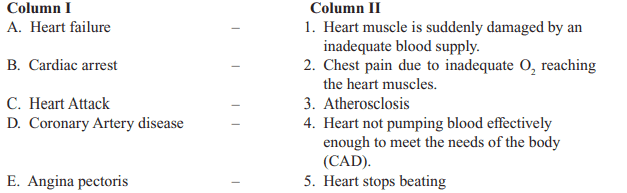
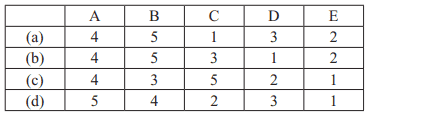
Explanation: A-4, B-5, C-1, D-3, E-2
46. It is often referred to as atherosclerosis, it affects the blood vessels that supply blood to the
heart muscles. It is caused by the deposition of Ca, fat, cholesterol and fibrous tissues making
the lumen of arteries narrow
a) CAD
b) SCID
c) Blue baby
d) myocarditis
Explanation: CAD
47. The given figure describes the diagrammatic representation of standard ECG.
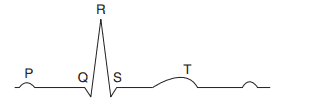
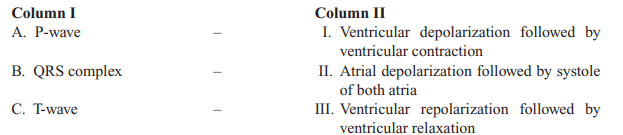
a) A–I, B–II, C–III
b) A–III, B–II, C–I
c) A–II, B–I, C–III
d) A–II, B–III, C–I
Explanation: A–II, B–I, C–III
48.
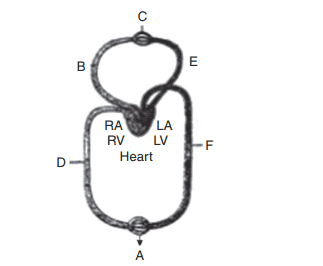
The given figure is the systematic plant of blood circulation in human. Identify from A to F.

Explanation: A-Body parts
B-Pulmonary artery
C-Lungs
D-Vena cava
E-Pulmonary vein
F-Dorsal aorta
49. Which is the nature of blood passing through blood vessels (A, B, C and D)?
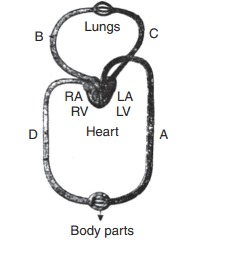
What is the nature of blood passing through blood vessels (A, B, C and D)?

Explanation: A-Oxygenated, B-Deoxygenated, C-Oxygenated, D-Deoxygenated
50. Identify the following blood vessels
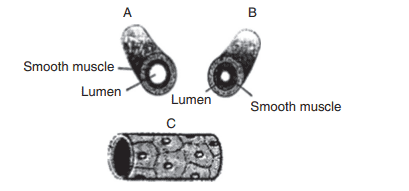
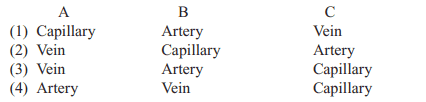
Explanation: A-Vein, B-Artery, C-Capillary
51. The given diagram shows which cell of blood?

a) Neturophil
b) Basophil
c) Eosinophil
d) Monocyte
Explanation: Eosinophil
52. Which of the following is a true statement about this diagram?

a) This is the most abundant cell of blood.
b) This cell is phagocytic in nature.
c) Abundance in blood is 60–65%.
d) This cell secrete histamine, serotonin and heparin
Explanation: "This cell is phagocytic in nature". This is a true statement.
53. The function of the cell fragments in blood (given in the diagram) is

a) To resist infection
b) To be responsible for immune response
c) To help in clotting of blood
d) To resist allergy
Explanation: To help in clotting of blood
54. Which cell represents the surface antigen for ABO blood group?

a) A
b) B
c) C
d) All of these
Explanation: A
55. Identify A, B, C, D, E, F, G and H in the given diagram.

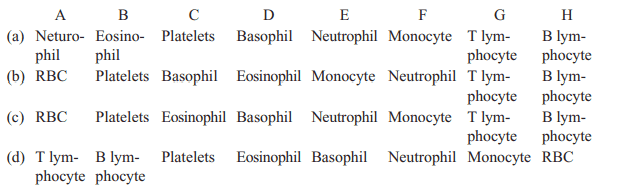
Explanation: A-RBC
B-Platelets
C-Eosinophil
D-Basophil
E-Neutrophil
F-Monocyte
G-T lymphocyte
H-B lymphocyte
56. Rate of heartbeat is the highest in
a) Whale
b) Elephant
c) Mouse
d) Man
Explanation: Rate of heartbeat is the highest in mouse
57. Which of the following pair of terms represent both one and the same thing?
a) Plasma–Serum
b) Atrioventricular node–Pacemaker
c) Leucocytes–Lymphocytes
d) Mitral valve–Bicuspid valve
Explanation: Mitral valve–Bicuspid valve
58. How many times a red blood corpuscle will have to pass through the heart in its journey from
hepatic artery to the aorta?
a) Two times
b) Only once
c) Several times
d) Four times
Explanation: Two times
59. Maximum pressure of blood is experienced
a) When blood enters from left atrium to aorta
b) When blood enters from right atrium to aorta
c) When blood enters from left ventricle to aorta
d) When blood enters from right ventricle to aorta
Explanation: When blood enters from left ventricle to aorta
60. The blood circulation, which starts and ends into capillaries is
a) Portal circulation
b) Renal circulation
c) Hepatic circulation
d) Lymphatic circulation
Explanation: Portal circulation